retainingwallcontractorescondido.com
Concrete Retaining Wall Installation in Escondido, CA
Looking for a concrete retaining wall installation in Escondido? Work with a contractor who understands Escondido's soil and slope conditions is important. Clay-heavy soil and steep hillside grades both affect how a concrete wall needs to be engineered here.
Concrete Retaining Wall Installation Across Escondido, CA
Escondido’s valley-and-hillside geography is a big part of why concrete is such a common choice here. Steeper lots need a material that can handle higher soil loads, and concrete is often the most reliable option for that job.
With a population of roughly 145,000 residents, and a significant share of housing built on graded slopes and hillside terrain, concrete retaining walls are a regular part of residential construction and renovation projects across the city.
Escondido at a Glance
- Population: Approximately 145,000 residents
- Location: North San Diego County, in a valley surrounded by hills and canyons
- Terrain: Hillside lots, canyon edges, and steep residential parcels are common throughout the city
- Climate: Warm, dry summers and a defined winter rainy season, which puts seasonal stress on unsupported or poorly drained slopes
- Housing: A mix of established mid-century neighborhoods and newer hillside developments, many requiring reinforced wall construction
Neighborhoods We Commonly Build Concrete Walls In
- Old Escondido — older, established lots near downtown, often needing reinforced replacement walls
- Eureka Springs — newer hillside development in southern Escondido with steeper graded lots
- Felicita — hillside terrain near Felicita County Park
- Hidden Meadows — larger hillside properties where taller concrete walls are common
- Kit Carson — family neighborhoods near Kit Carson Park with varied lot terrain
- Lake Hodges / East Valley — properties near the lake with natural slope and drainage considerations
- San Pasqual Valley — rural and semi-rural lots bordering agricultural land
- East Escondido and Bear Valley — established residential areas with a mix of flat and sloped lots
If your neighborhood isn’t listed here, that’s not a problem — we build concrete retaining walls across Escondido and the surrounding North County area.
Why Escondido’s Geography Matters for Concrete Wall Design
Steeper hillside lots in areas like Hidden Meadows and Eureka Springs typically require deeper footings and reinforced concrete to safely manage higher soil loads. Flatter lots elsewhere in the city may need a lighter design.
Escondido’s clay-heavy soil also expands and contracts with seasonal moisture, which is a key factor in how footings and drainage are engineered for concrete walls here.
Because soil load and grade vary so much across the city, concrete wall design isn’t one-size-fits-all — it depends on the specific slope and soil conditions of each property.
What Is Concrete Retaining Wall Installation?
Concrete retaining wall installation is the process of building a wall using poured concrete, concrete block, or precast concrete panels to hold back soil on a sloped property.
The process involves excavation, footing preparation, drainage installation, and then forming and building the wall itself, depending on which concrete method is used.
Homeowners typically need this when facing a taller slope, a hillside lot, or a wall that needs to support significant soil weight — situations where concrete’s strength is a clear advantage.
The main benefits are structural strength, long-term durability, and the ability to support greater wall heights compared to some other materials.
Types of Concrete Retaining Wall Installation Options Available
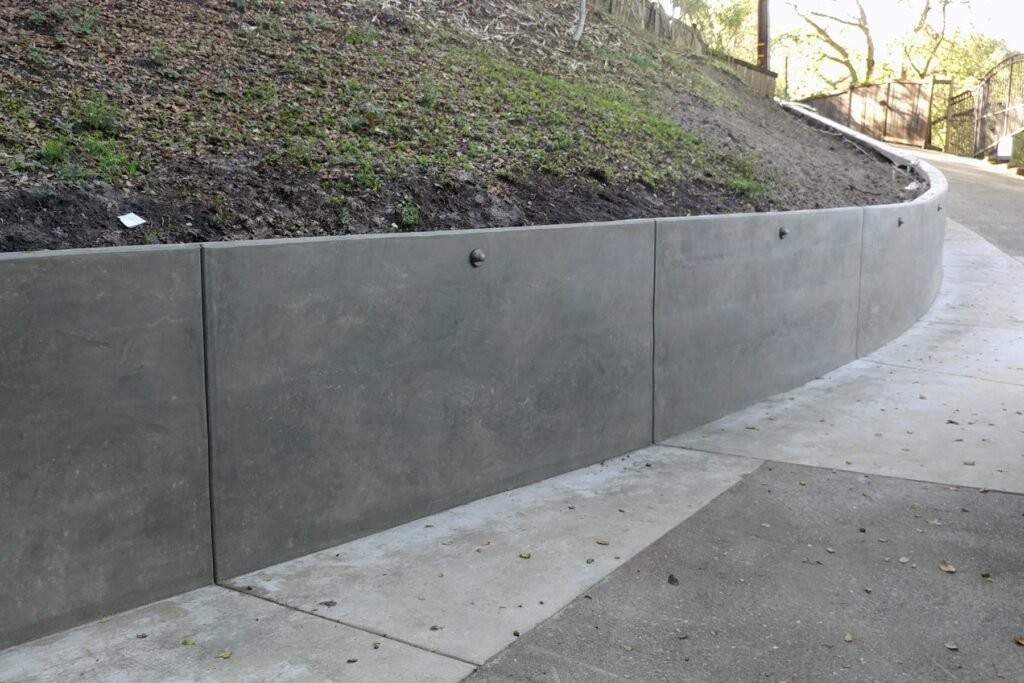
Poured Concrete Retaining Walls
Formed and poured on-site, these walls offer maximum strength and design flexibility, making them well-suited to taller or load-bearing applications.
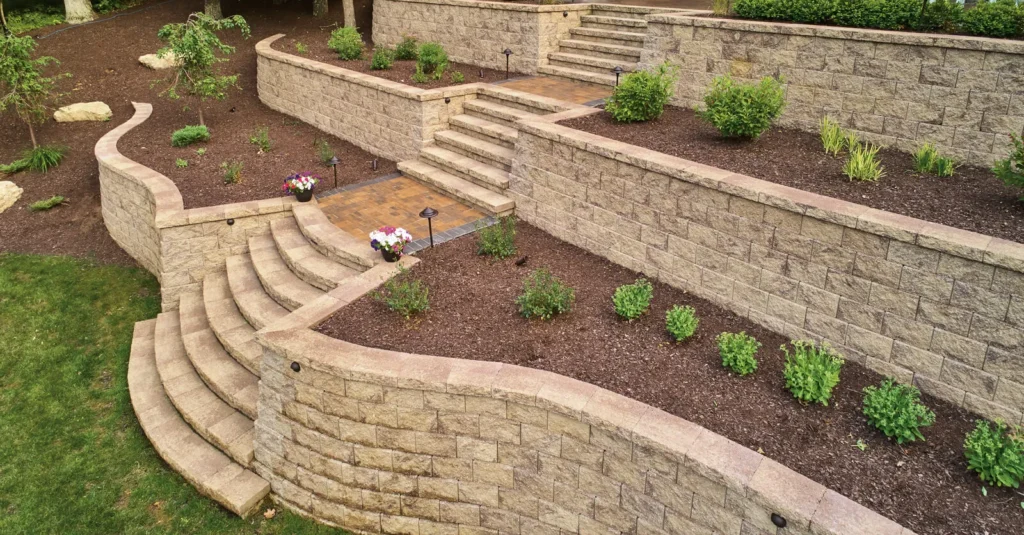
Concrete Block Retaining Walls
Built using interlocking concrete masonry units, block walls are a versatile, cost-effective option for a wide range of wall heights.
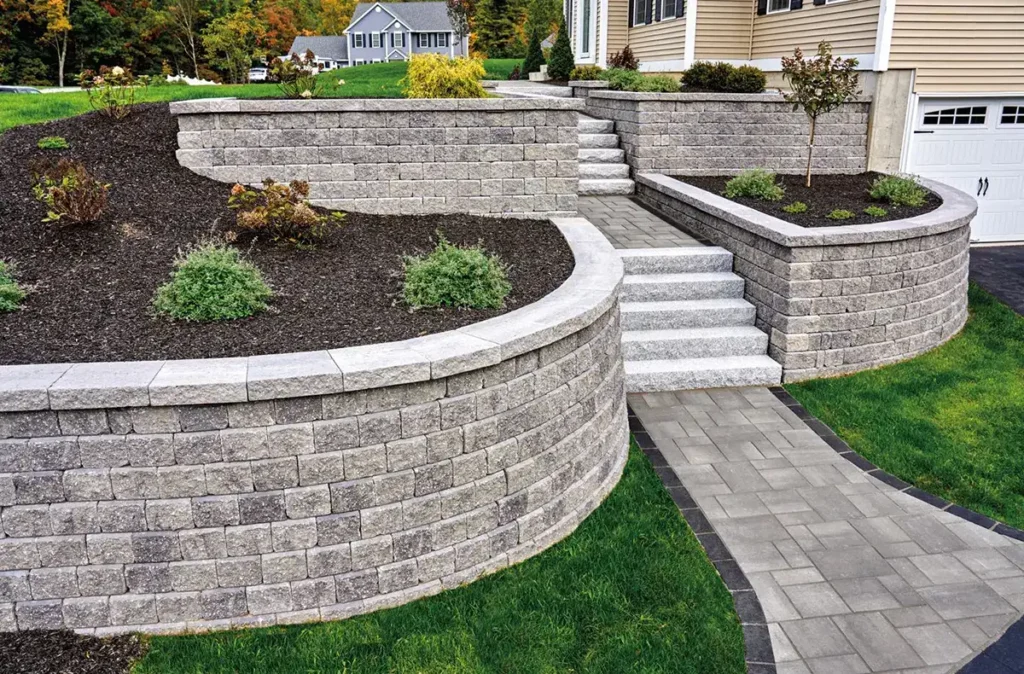
Precast Concrete Retaining Walls
Manufactured off-site and installed in sections, precast walls can offer faster installation timelines for certain project types.
Benefits of Concrete Retaining Wall Installation for Escondido Homeowners
Improves Property Functionality
A concrete wall can support taller, more demanding slopes than lighter materials, opening up usable yard space on lots that would otherwise be difficult to work with.
Helps Manage Slopes and Soil Movement
Concrete's strength makes it well-suited to Escondido's steeper hillside lots, where soil pressure behind the wall is often greater than on flatter properties.
Improves Drainage and Erosion Control
When properly designed with drainage systems behind the wall, concrete walls handle water pressure effectively, reducing erosion risk during Escondido's rainy season.
Enhances Outdoor Appearance
Concrete can be finished, stamped, or faced in a range of textures and colors, so it doesn't have to look purely industrial or utilitarian.
Adds Long-Term Property Value
A well-built concrete wall is a durable, low-maintenance structural improvement that protects the property for decades.
Let's Start Your Retaining Wall Project in Escondido
Let’s chat about your ideas! Getting started is easy – simply reach out with details about your retaining wall project!
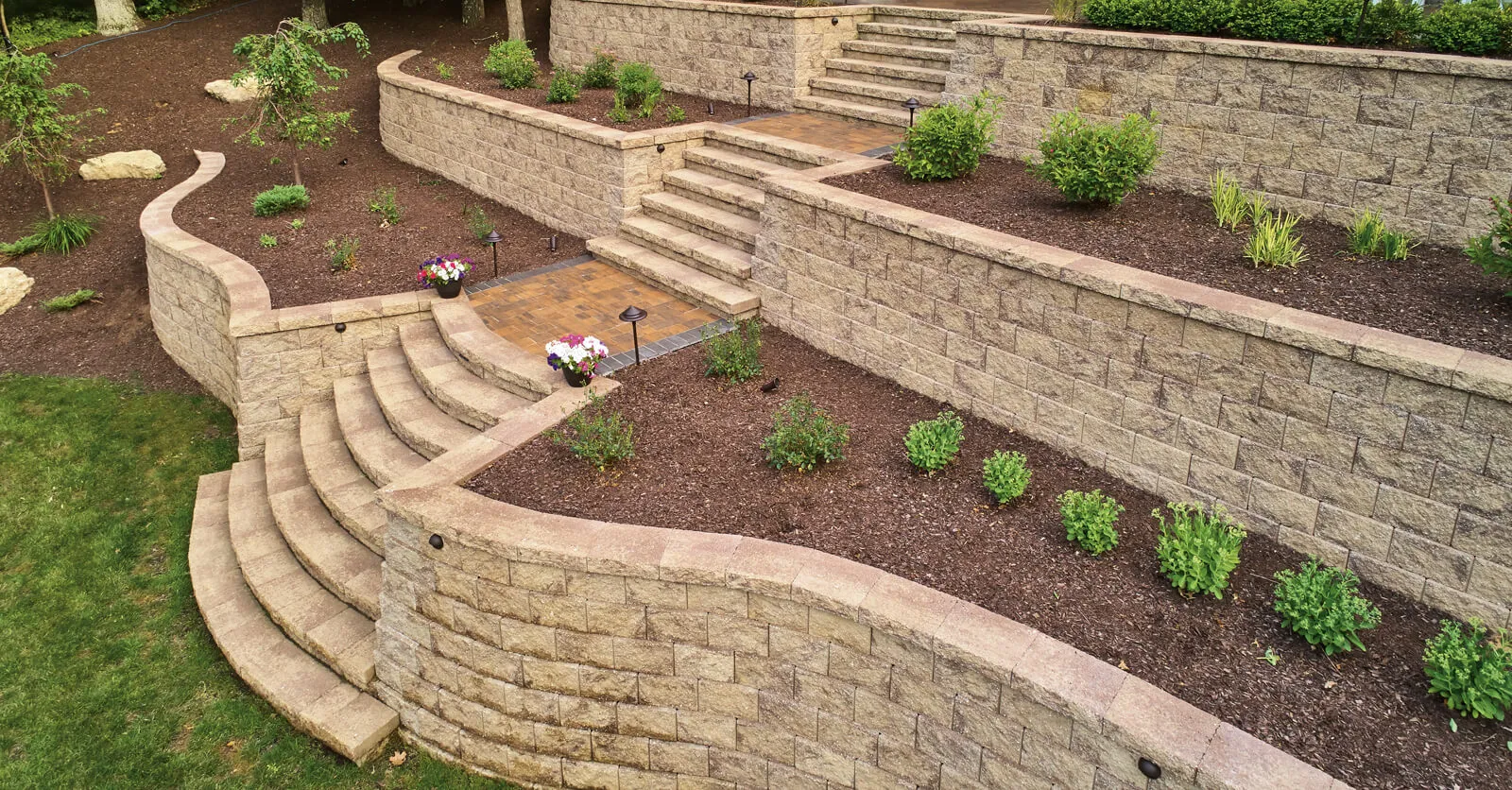
The Concrete Retaining Wall Installation Process
1. Property Assessment
We evaluate your slope, soil conditions, drainage patterns, and the wall height needed to determine the right concrete approach.
2. Design and Planning
We design a wall suited to your property’s grade and soil load, including footing depth and reinforcement requirements.
3. Material Selection
You’ll choose between poured, block, or precast concrete based on budget, timeline, and design preferences.
4. Preparation and Installation
Our team handles excavation, footing and drainage installation, and the structural build of the concrete wall.
5. Final Inspection and Cleanup
Once installation is complete, we inspect the finished wall, confirm drainage is functioning properly, and clean up the work site.
How Much Does Concrete Retaining Wall Installation Cost in Escondido?
Typical Project Cost Ranges
| Project Type | Typical Cost Range | Factors Affecting Price |
|---|---|---|
| Small Concrete Block Wall (under 3 ft) | $3,000 – $8,000 | Wall length, site access, finish |
| Standard Concrete Block Wall (3–6 ft) | $8,000 – $20,000 | Height, drainage needs, reinforcement |
| Poured Concrete Wall | $12,000 – $30,000 | Formwork complexity, reinforcement, height |
| Precast Concrete Wall | $10,000 – $25,000 | Panel size, site access, foundation prep |
| Large Hillside Concrete Wall | $20,000 – $50,000+ | Engineering requirements, slope grade, excavation |
These ranges are general estimates. Every property is different, and final pricing depends on a full site evaluation.
Factors That Affect Concrete Retaining Wall Pricing
- Wall height — taller concrete walls require deeper footings and additional reinforcement.
- Concrete method — poured, block, and precast each carry different labor and material costs.
- Reinforcement needs — steel rebar and reinforced footings add cost but are often necessary for taller walls.
- Site accessibility — concrete delivery and equipment access affect labor time and cost.
- Existing conditions — removing an old wall or dealing with tree roots adds to project scope.
- Drainage requirements — proper drainage systems are essential and factor into overall cost.
- Finish choices — stamped, textured, or faced concrete adds cost over a standard finish.
Local Escondido Factors That Affect Cost
- Hillside terrain — steeper Escondido lots often require reinforced concrete and deeper footings, increasing cost.
- Soil conditions — clay-heavy soil common in this area affects excavation, footing depth, and drainage design.
- Residential lot layouts — narrow side yards or tight backyard access can limit equipment use and increase labor time.
- Climate considerations — seasonal rain makes proper drainage planning essential for long-term wall performance.
Why Detailed Estimates Matter
Concrete wall costs can vary significantly based on method, reinforcement, and finish. A vague quote makes it hard to know what you’re actually paying for.
A detailed estimate breaks down the concrete method, reinforcement plan, drainage design, and finish — so you understand the full scope before work begins.
Why Choose Retaining Wall Contractor Escondido?
Local Knowledge of Escondido Properties
We build concrete retaining walls throughout Escondido’s hillside neighborhoods and understand the soil and slope conditions that affect concrete wall design here.
Quality Materials and Construction Practices
We use properly reinforced concrete and correctly sized footings and drainage so your wall performs the way it’s designed to over the long term.
Professional Installation Approach
Every concrete wall project follows a structured process, from assessment through final inspection, so the build stays organized and predictable.
Clear Communication From Start to Finish
We walk you through the concrete method, reinforcement plan, and drainage design in plain language before work begins.
Homeowner-Focused Service
We understand a concrete wall is a significant investment, and our goal is to make the process transparent and straightforward from start to finish.
Need Help?
Common Questions About Concrete Retaining Wall Installation
Below are some of the most common questions Our Network get from families about Retaining Wall. If you have any other questions contact us!
How much does a concrete retaining wall cost in Escondido?
Small concrete block walls under 3 feet typically run $3,000–$8,000. Standard 3–6 foot walls run $8,000–$20,000. Poured concrete walls run $12,000–$30,000, and large hillside walls can reach $50,000+.
How tall can a concrete retaining wall be?
Concrete walls can be engineered for heights well beyond what block or timber walls typically support — often 10–15+ feet with proper reinforcement and footing design, versus roughly 4–6 feet for many standard block walls.
How long does concrete retaining wall installation take?
Small block walls typically take 3–7 days. Standard poured concrete walls take 1–3 weeks, largely due to curing time. Large hillside walls can take 3–6 weeks.
How long does concrete need to cure before it's load-bearing?
Concrete typically reaches about 70% of its strength within 7 days and close to full strength around 28 days, which is why poured walls take longer to complete than block walls.
Is a poured concrete wall better than a concrete block wall?
Poured concrete generally handles higher soil loads and taller heights. Block walls cost less and install faster, making them a better fit for most walls under 6 feet.
Do concrete retaining walls need drainage?
Yes. Concrete walls over roughly 2–3 feet need a drainage system — typically gravel backfill and a perforated drain pipe — to relieve water pressure behind the wall.
How long do concrete retaining walls last?
Properly built and drained concrete walls typically last 50–100 years, making them one of the longer-lasting retaining wall materials available.
Can a concrete retaining wall be repaired if it cracks?
Hairline cracks under about 1/8 inch are usually cosmetic and repairable. Cracks wider than 1/4 inch, or any signs of leaning, should be evaluated for structural repair.
Do I need a permit for a concrete retaining wall in Escondido?
Generally yes for walls over 3 feet tall, measured from the footing to the top of the wall, consistent with typical California building code thresholds. We confirm exact requirements during your site visit.
Price your poured concrete wall
Poured walls are priced by concrete volume as much as by wall face. The calculator works out your stem and footing yardage, whether a pump is needed, and what the finish costs on top.
Every calculator gives a planning range with a full cost breakdown — it is not a contractor quote.
Contact Retaining Wall Contractor Escondido Today
If your property needs a wall strong enough to handle a steep slope or significant soil load, concrete is often the most reliable choice — and getting the engineering right matters just as much as the material.
We build concrete retaining walls throughout Escondido, from hillside developments to established downtown lots, designed around your property’s specific soil and slope conditions.
Every project starts with a free, no-pressure consultation, so you can understand your options before making any decisions.